Menyatukan Tiga Mesin Ekonomi Syariah: Kerangka IBSF-HVC untuk Pembangunan Inklusif Banten
SERANG — Pertumbuhan aset perbankan syariah yang masif seringkali menubruk tembok tebal realitas: literasi meroket, namun inklusi produk tertinggal jauh. Di hadapan para akademisi internasional dan pembuat kebijakan dalam ajang Banten International Conference on Halal Economy and Finance (BICHEF) 2026 di Auditorium FEBI Lantai 2 UIN Sultan Maulana Hasanuddin Banten, Rabu (5/11/2026), Direktur Eksekutif KDEKS Banten, Prof. Dr. Euis Amalia, M.Ag., membongkar akar masalah diskoneksi struktural ini dan menawarkan terobosan arsitektur baru bertajuk IBSF-HVC.
Forum ilmiah yang mempertemukan pemikir ekonomi Islam global—termasuk Keynote Speaker Prof. Dr. Budi Sudrajat, M.A., Speaker Prof. Dr. S. Salahudin Suyurno dari Universiti Teknologi MARA Malaysia, serta perwakilan OJK Banten Suwariyanti, S.T.—ini menjadi panggung bagi Prof. Euis untuk mengkritisi paradoks makroekonomi syariah nasional. Di satu sisi, industri perbankan syariah nasional mencatatkan aset hingga Rp1.047 triliun dan jutaan produk tersertifikasi halal. Namun di sisi lain, rasio inklusi keuangan syariah nasional masih tertahan di angka 13,41%, kontras tajam dengan tingkat literasinya yang menyentuh 43,42%.
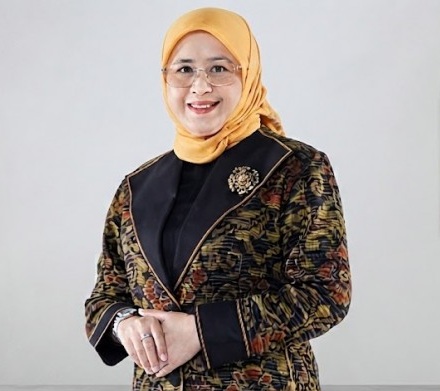
“Selama ini perbankan syariah, dana sosial Islam, dan industri halal berjalan sendiri-sendiri pada poros terpisah. Kita tidak kekurangan modal atau produsen halal, melainkan ketiadaan arsitektur regional yang menyatukan ketiganya dalam satu ekosistem yang koheren.”
Anatomi Diskoneksi: Ketimpangan Utara-Selatan dan Lima Friksi Struktural
Dalam pemaparannya yang tajam secara empiris, Guru Besar Ekonomi Islam UIN Syarif Hidayatullah Jakarta ini menyoroti ketimpangan ekstrem di Provinsi Banten. Kawasan Banten Utara berkembang pesat sebagai pusat industri modern—didukung Kawasan Industri Modern Cikande seluas 3.175 hektare dan Pelabuhan Merak—sementara wilayah selatan seperti Pandeglang dan Lebak yang menjadi sentra pertanian dan perikanan justru menghadapi problem kemiskinan struktural dan ketiadaan akses pembiayaan yang memadai.
Prof. Euis memetakan lima FRIKSI struktural utama yang menjadi hambatan:
- Mandat yang Tersegmentasi: Perbankan, lembaga amil zakat, nazir wakaf, dan badan sertifikasi beroperasi dengan target parsial tanpa ada institusi yang mengawal pendampingan UMKM hingga layak bank (bankable).
- Ketidaksesuaian Risiko dan Kapasitas: Produsen mikro di sektor hulu otomatis tersingkir dari kriteria asesmen risiko perbankan komersial konvensional.
- Asimetri Informasi dan Silo Data: Basis data sertifikasi halal (BPJPH), data mustahiq, dan portofolio kredit perbankan terisolasi dalam silo masing-masing lembaga.
- Ketidakselarasan Instrumen dan Rantai Nilai: Skema pembiayaan kerap dirancang atas dasar ego sektoral institusi, bukan berdasarkan tahapan riil rantai pasok halal (halal value chain).
- Lemahnya Orkestrasi Regional: Visi ekonomi syariah belum sepenuhnya terinternalisasi secara operasional ke dalam dokumen perencanaan dan penganggaran daerah (RPJMD).
Solusi Arsitektural: Kerangka Kerja IBSF-HVC dan Jalur Kelulusan Tiga Tier
Sebagai jawaban atas kebuntuan tersebut, Prof. Euis memperkenalkan kerangka operasional IBSF-HVC (Integrated Islamic Banking and Islamic Social Finance for the Halal Value Chain). Kerangka ini mendesain ulang tata kelola keuangan regional melalui pembagian peran yang terintegrasi:
KDEKS Banten sebagai Dirigen Orkestrasi Regional
Melalui kerangka kerja ini, KDEKS Banten diposisikan sebagai orkestrator utama yang merajut kolaborasi Triple Helix—pemerintah, regulator, industri, amil, nazir, serta perguruan tinggi seperti UIN SMH Banten dan Untirta. Dengan mengintegrasikan basis data tunggal dan instrumen pembiayaan yang terarah, roadmap pembangunan ekonomi syariah 2025–2029 dapat dieksekusi secara akuntabel.
Pembangunan ekonomi inklusif tidak akan terwujud dari instrumen yang berjalan sendiri-sendiri, melainkan dari keberanian merajut modal sosial menjadi kekuatan ekonomi komersial yang berkeadilan.
Dari Teori ke Aksi Nyata Pembangunan.
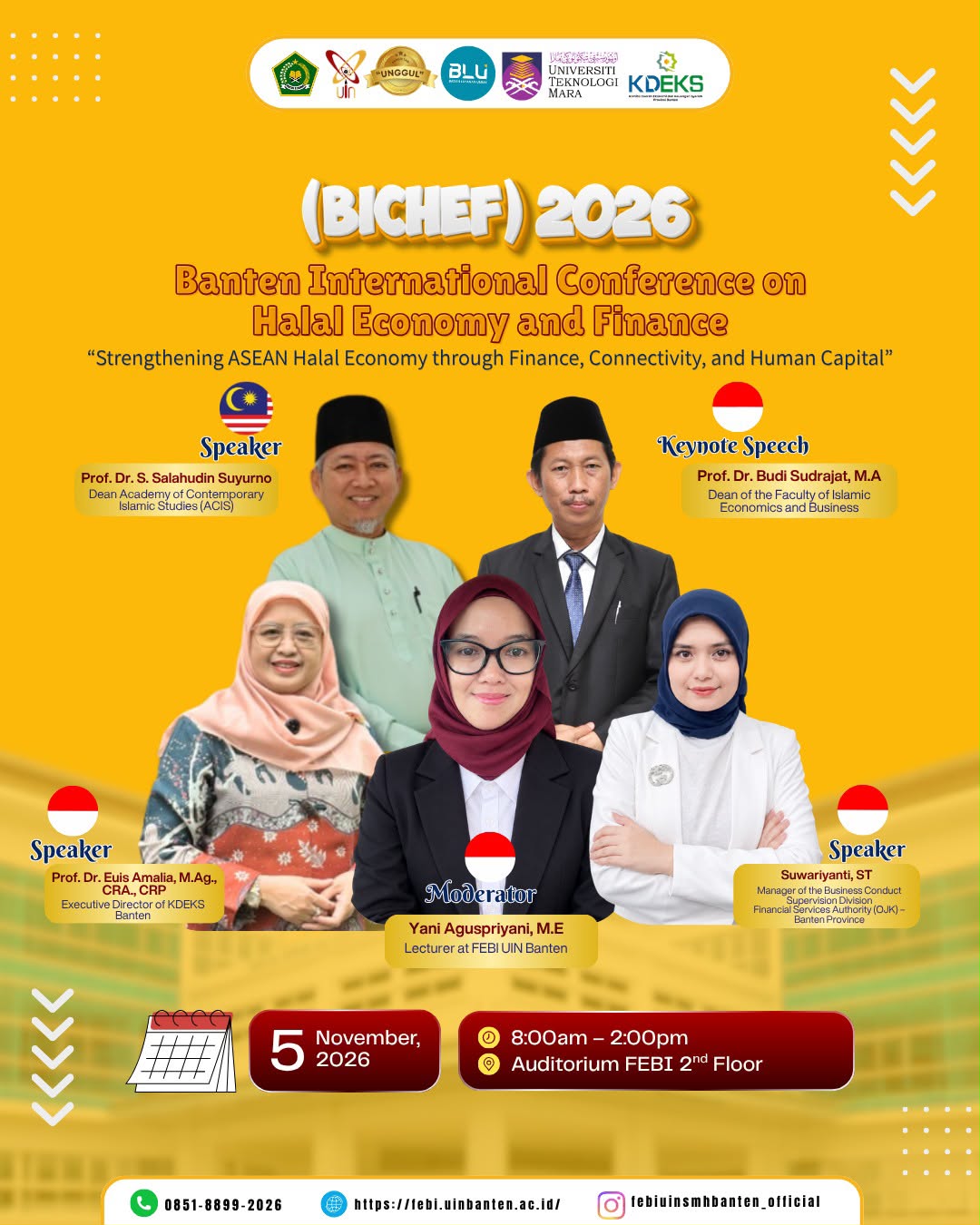 Flyer Resmi BICHEF 2026 (Rabu, 5 November 2026, Auditorium FEBI UIN SMH Banten) — Klik gambar untuk melihat ukuran penuh.
Unifying the Three Engines of Islamic Finance: The IBSF-HVC Framework for Banten’s Inclusive Development
SERANG — The remarkable growth of Islamic banking assets often collides with a stark reality: financial literacy surges while product inclusion lags far behind. Addressing international scholars and policymakers at the Banten International Conference on Halal Economy and Finance (BICHEF) 2026, held at the FEBI Auditorium 2nd Floor, UIN Sultan Maulana Hasanuddin Banten on Wednesday (5/11/2026), KDEKS Banten Executive Director Prof. Dr. Euis Amalia, M.Ag., dissected the roots of this structural disconnect and proposed a transformative architectural framework known as IBSF-HVC.
Convening global Islamic economics experts—including Keynote Speaker Prof. Dr. Budi Sudrajat, M.A., Speaker Prof. Dr. S. Salahudin Suyurno from Universiti Teknologi MARA Malaysia, and OJK Banten representative Suwariyanti, ST—the conference served as a platform for Prof. Euis to critique the paradox of Indonesia’s national Islamic economy. While national Islamic banking assets reached IDR 1,047 trillion alongside millions of halal-certified items, financial inclusion remains constrained at 13.41%, creating a profound divergence from the 43.42% literacy rate.
“Islamic banking, social finance, and the halal industry have operated in isolation on separate tracks. We lack neither capital nor halal producers; rather, we lack a regional architecture to integrate them into a coherent ecosystem.”
Structural Disconnects: The North-South Divide and Five Frictions
In her analytically rigorous presentation, the Professor of Islamic Economics at UIN Syarif Hidayatullah Jakarta highlighted the severe regional disparities within Banten Province. The northern corridor thrives as an industrial hub—anchored by the 3,175-hectare Modern Cikande Industrial Estate and Merak Port—whereas the agricultural south (Pandeglang and Lebak) struggles with structural poverty and persistent financing exclusion.
Prof. Euis identified five primary structural frictions hindering integration:
- Segmented Mandates: Financial institutions, zakat agencies, waqf managers, and halal bodies optimize isolated targets without a unified agency overseeing MSME graduation into bankable enterprises.
- Risk-Capacity Mismatch: Upstream micro-producers are systematically excluded under conventional commercial risk assessment frameworks.
- Information Asymmetry and Data Silos: Halal certification registries (BPJPH), zakat recipient databases, and banking credit portfolios operate in complete isolation.
- Instrument-Stage Misfit: Financial products are engineered according to institutional silos rather than the operational stages of the halal value chain.
- Weak Regional Orchestration: Islamic economic targets remain peripheral to local government development and budgetary planning (RPJMD).
Architectural Solutions: The IBSF-HVC Framework and Three-Tier Graduation Pathway
To overcome this systemic deadlock, Prof. Euis introduced the IBSF-HVC framework (Integrated Islamic Banking and Islamic Social Finance for the Halal Value Chain), structuring regional financial instruments into a sequential graduation model:
KDEKS Banten as the Regional Orchestrator
The framework positions KDEKS Banten as the primary regional orchestrator uniting the Triple Helix—government, regulators, industry, amil, nazir, and academic institutions such as UIN SMH Banten and Untirta. Through unified enterprise data dashboards and coordinated financing forums, Banten’s 2025–2029 strategic roadmap can be executed with measurable accountability.
Inclusive regional development does not emerge from fragmented instruments, but from the deliberate architecture connecting social capital with commercial scale.
From Theory to Development Action.
Official BICHEF 2026 Flyer (Wednesday, Nov 5, 2026, FEBI Auditorium UIN SMH Banten) — Click image to view full size.
توحيد محركات الاقتصاد الإسلامي الثلاثة: إطار IBSF-HVC للتنمية الشاملة في بانتن
سيرانغ — غالباً ما يصطدم النمو الهائل لأصول المصرفية الإسلامية بواقع صلب مفاده أن الوعي الثقافي يرتفع بينما يتخلف الشمول المالي الفعلي. وأمام حشد من الأكاديميين الدوليين وصناع القرار في مؤتمر بانتن الدولي للاقتصاد والمالية الحلال (BICHEF) 2026 الذي عُقد في قاعة المؤتمرات الكبرى بكلية الاقتصاد والعلوم الإسلامية بجامعة السلطان مولانا حسن الدين الإسلامية الحكومية ببانتن، الأربعاء (5/11/2026)، شخصت المديرة التنفيذية لـ KDEKS بانتن، البروفيسورة الدكتورة عيسى أماليا، جذور هذا الانفصال الهيكلي وقدمت إطاراً هندسياً مبتكراً يُعرف بـ IBSF-HVC.
شكل المؤتمر الذي جمع نخبة من رواد الفكر الاقتصادي الإسلامي العالمي—بمن فيهم المتحدث الرئيسي الأستاذ الدكتور بودي سوبراجات، والمتحدث الرئيسي الأستاذ الدكتور صلاح الدين سويورنو من ماليزيا، وممثلة OJK بانتن سورييانيتي—منصة أكاديمية للبروفيسورة عيسى لتسليط الضوء على مفارقة الاقتصاد الإسلامي في إندونيسيا. ففي حين بلغت أصول المصرفية الإسلامية 1,047 تريليون روبية مع ملايين المنتجات الحلال المعتمدة، استقر معدل الشمول المالي عند 13.41% فقط، في تناقض حاد مع معدل الثقافة المالية البالغ 43.42%.
“لقد عملت المصرفية الإسلامية والمالية الاجتماعية والصناعة الحلال في جزر معزولة على مسارات منفصلة. نحن لا نفقده الرأسمال ولا المنتجين الحلال، بل نفتقر إلى الهندسة الإقليمية التي تربط بينها في منظومة متكاملة.”
التباين الهيكلي: فجوة الشمال والجنوب والاحتكاكات الهيكلية الخمس
في تحليلها المعمق، أشارت أستاذة الاقتصاد الإسلامي بجامعة شريف هداية الله الحكومية بجاكرتا إلى التفاوت الإقليمي الحاد في مقاطعة بانتن. فبينما يزدهر الشمال كقطب صناعي حديث عبر مجمع مودرن جيكاندي الصناعي وميناء ميراك، يواجه الجنوب (بانديغلانغ وليباك) معضلة الفقر الهيكلي ومحدودية الوصول للتمويل على الرغم من ثرواته الزراعية والسمكية.
وحددت البروفيسورة عيسى خمسة احتكاكات هيكلية رئيسية تعيق التكامل المنشود:
- تشتت الولايات المؤسسية: تعمل المؤسسات المالية ومؤسسات الزكاة والوقف وهيئات الحلال لتحقيق مستهدفات خاصة دون جهة مركزية تواكب رحلة تمكين المؤسسات الصغيرة حتى تصبح قابلة للتمويل (bankable).
- عدم التوافق بين المخاطر والقدرات: استبعاد المنتجين الصغار تلقائياً وفقاً لمعايير تقييم المخاطر البنكية التقليدية الصارمة.
- تخندق البيانات (Data Silos): انعزال قواعد بيانات الاعتماد والحلال (BPJPH) وبيانات المستحقين والائتمان عن بعضها البعض.
- عدم ملاءمة الأدوات للمراحل: تصميم المنتجات المالية بناءً على المصالح المؤسسية لا بناءً على المراحل التشغيلية لسلسلة القيمة الحلال.
- ضعف التنسيق والتخطيط الإقليمي: غياب مستهدفات الاقتصاد الإسلامي عن سياسات التخطيط والموازنات التنموية المحلية (RPJMD).
الحل الهندسي: إطار IBSF-HVC ومسار التخرج ثلاثي المستويات
كاستجابة استراتيجية لهذا المأزق، طرحت البروفيسورة عيسى إطار IBSF-HVC (Integrated Islamic Banking and Islamic Social Finance for the Halal Value Chain) الذي يعيد هندسة توجيه الأدوات المالية عبر مسار تصاعدي متكامل:
لجنة KDEKS بانتن كمنسق إقليمي مرجعي
يضع هذا الإطار الاستراتيجي لجنة KDEKS بانتن في موقع المنسق الرئيسي الذي يوحد جهود الأطراف الثلاثة (الحكومة، الجهات التنظيمية، القطاع الصناعي، مؤسسات الزكاة والوقف، والجامعات كـ UIN SMH بانتن وUntirta). ومن خلال لوحات تحكم البيانات الموحدة ومنتديات التمويل المشتركة، يمكن متابعة تنفيذ خريطة الطريق 2025–2029 بمسؤولية وموثوقية عالية.
لا تنشأ التنمية الاقتصادية الشاملة من أدوات متناثرة، بل من هندسة واعية تربط رأس المال الاجتماعي بالحجم التجاري لصالح المجتمع.
من الفكر النظري إلى العمل التنموي.
الملصق الرسمي لمؤتمر BICHEF 2026 (الأربعاء 5 نوفمبر 2026، قاعة المؤتمرات FEBI UIN SMH بانتن) — انقر على الصورة لعرضها بالحجم الكامل.
